Total hip replacement is a surgical procedure where the worn out surfaces
of the hip are replaced with man-made components. Over time, cartilage
that cushions the bones can wear away, cause pain and discomfort, and
make simple pleasures like walking and shopping unbearable. Hip replacement
can reduce or eliminate pain, allow easier movement and get you back to life.
Who Is a Candidate for Total Hip Replacement?
Hip replacement surgery may be considered for individuals suffering from
arthritic hip pain that severely limits daily activities. It is only recommended
after careful examination and diagnosis of your particular joint problem,
and only after more conservative measures such as exercise, physical therapy
and medications have proven ineffective.
What Kind of Hip Implant Is Best?
There are many kinds and designs of hip implants available today, and no
one design or type is best for every patient. Surgeons select the implant
they believe is best for their patient's needs based on a number of factors
including age, activity level, the implant's track record, and his or
her comfort with the instruments associated with the particular implant.
If you have questions regarding implants, your surgeon will be happy to
answer them for you.
How Long Will I Be in the Hospital?
With improvements in surgical techniques and post-op care, it is now common
for many patients to be able to go home from the hospital after one to
two days. Of course, each patient is different, but the goal should be
for you to recover in the comfort and privacy of your own home as soon
as possible.
How Long Is the Recovery Period?
Recovery can vary from person to person, but most people will need to use
an ambulation aid such as a walker for 4 weeks or so. Most people will
be able to go straight home from the hospital, though some patients, particularly
those that live alone, may need to spend a few days at a rehab center
or nursing home. Keep in mind that healing and recovery times can vary.
How Much Does Total Hip Replacement Hurt?
You will experience some discomfort after surgery, but be assured we will
do everything we can to keep you as comfortable as possible. Pain after
hip replacement surgery varies from person to person, and not entirely
predictable, but modern medications and improved anesthetic techniques
greatly enhance our ability to control pain and discomfort after surgery.
What if I Have Other Questions?
Just give us a call. We'll be happy to answer any questions. And be sure
to ask us about our upcoming seminars on knee and hip pain - we'd love
to see you!

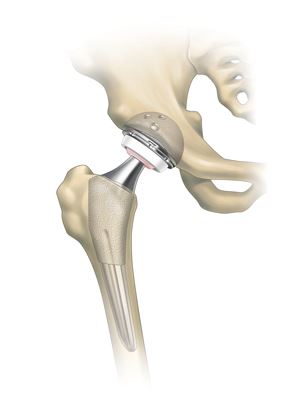 Total hip replacement is a surgical procedure where the worn out surfaces
of the hip are replaced with man-made components. Over time, cartilage
that cushions the bones can wear away, cause pain and discomfort, and
make simple pleasures like walking and shopping unbearable. Hip replacement
can reduce or eliminate pain, allow easier movement and get you back to life.
Total hip replacement is a surgical procedure where the worn out surfaces
of the hip are replaced with man-made components. Over time, cartilage
that cushions the bones can wear away, cause pain and discomfort, and
make simple pleasures like walking and shopping unbearable. Hip replacement
can reduce or eliminate pain, allow easier movement and get you back to life.